
Service · Hospitality Programs
Patio Heating Programs for Charleston Restaurants & Bars
Charleston diners will sit through a 45-degree night if the patio is warm — a standing heater plan is how you keep those seats in service from November through February. Units rent at the same flat $130 per heater, per event day as any event, with propane billed per filled tank used. We place, light and service on a repeating schedule so closing staff never think about tanks.
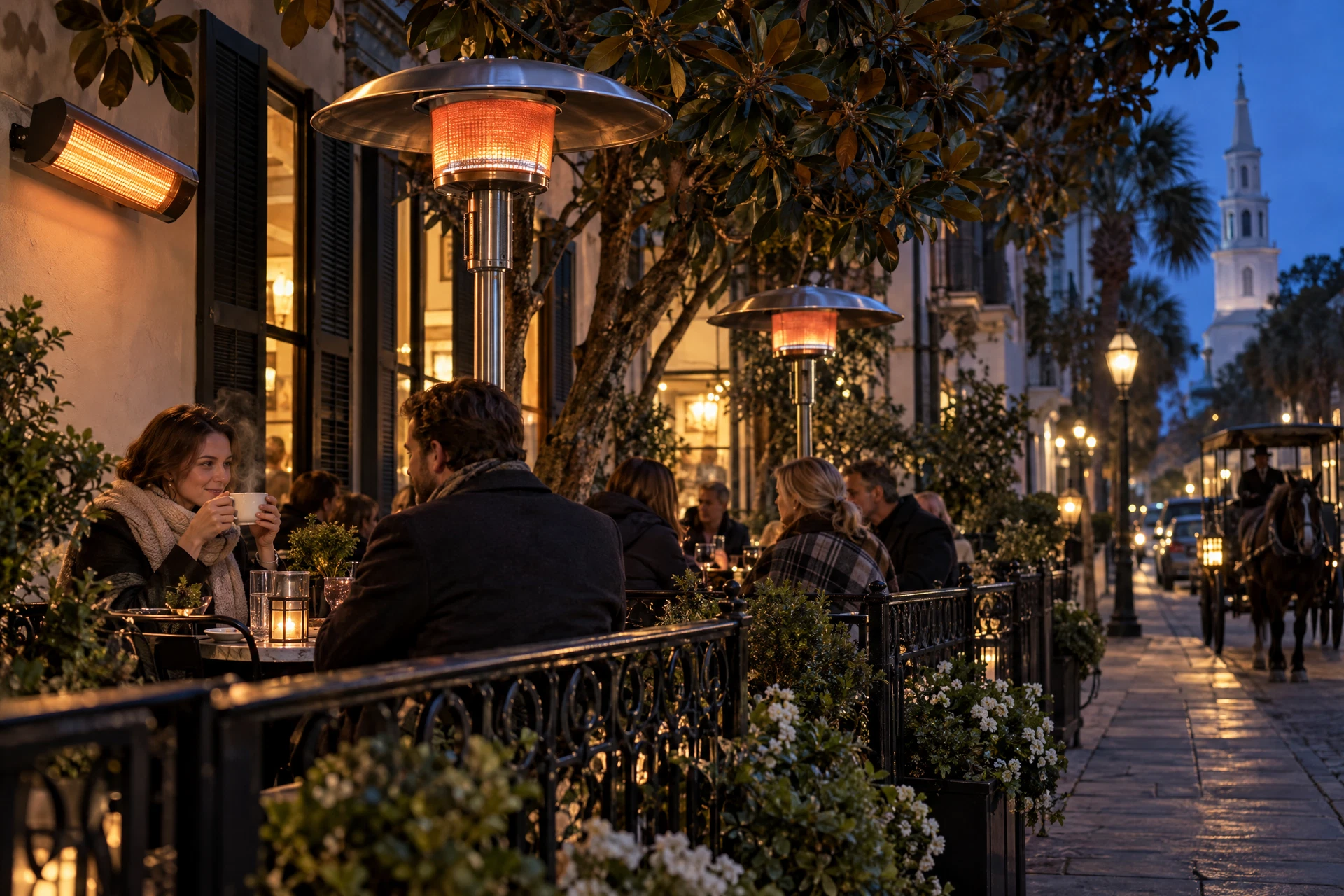
Cold nights are unsold tables
Charleston's damp 40–50 degree evenings from December through February empty patios that a dry freeze would not, because the moisture pulls warmth off seated guests. A standing heater grid changes the math: tables near the rail stay in service, the host can seat parties outside without a coin flip, and shoulder-season covers stop being a lottery. We plan from your actual seat map — which tables you want warm tonight, and how late they need to stay warm.
A grid that repeats every night
Programs use the same placement every service: mushrooms on the dining grid, pyramids at the entrance and host stand, where the glow sells the patio from the sidewalk. Crews set, leak-check and light before opening on your schedule, and propane is billed per filled tank used with a rotation cadence worked out from your hours. Between services, units stand clear of table resets or stage out of sight — whichever the venue and your storage prefer.
- Weekly or seasonal standing schedules
- Tank rotation sized to actual burn hours
- Same placement checklist every visit
- Finishes matched to the building: stainless, bronze, black
Predictable, flat billing
The invoice your accountant sees is simple: $130 per heater, per event day, plus propane billed per filled tank used. Delivery, placement, leak-check and lighting are quoted with your service schedule by distance and site conditions, so a two-block peninsula courtyard and a James Island beer garden price differently and honestly. There are no per-unit tiers to negotiate between the mushroom and pyramid families — both are in the fleet, both are the same rate.
Clearances your insurer will like
Every unit is CSA/UL listed, and our crews verify thirty-six inches from menu stands, planters, umbrellas, awnings and siding on every visit — the paperwork your landlord or insurer asks for comes with the quote. Rooftop and balcony sites get an access and placement conversation before the first service. And the rule that never bends: open-flame heaters are outdoor appliances and never go inside a fully enclosed tent.
Best for
- Sidewalk and courtyard dining
- Rooftop bars and hotel terraces
- Shoulder-season seat recovery
- Operators wanting one repeatable service plan
Watch out
- Delivery and service visits are quoted per site
- Wind may force closer spacing on open blocks
- 36 inches from menu stands, planters and awnings
- Open flame stays out of fully enclosed tents
Build the program
Put the patio back in service
Tell us your date, layout and guest count — the placement plan and quote come back the same business day.
Patio seats through the cool season

Frequently asked questions
How do you price a seasonal patio program?
Same flat rate as any event: $130 per heater per event day; propane billed per filled tank used — one 20-lb tank runs a heater roughly 9 hours on high. Delivery, placement, leak-check and lighting are quoted with the event, by distance and site conditions, so you can forecast the season table by table.
How many heaters will my patio need?
It depends on the seat map, not the lot size. A 50,000 BTU mushroom comfortably anchors about one eight-top; windward edges, awnings and rooftops change the spacing. Send a sketch with your table numbers and we will mark up a grid you can run all winter.
What happens on a rainy or very windy night?
Weather calls go out that morning to whoever you designate. A standing schedule does not override safe operation: heavy rain, sustained wind or venue rules can pause the outdoor zone, and we will confirm placement or collection changes before your staff arrives.
Can propane tanks sit on the patio overnight?
Tanks stay concealed inside each heater base during service, which is what most venues require. Where a full spare rotation is needed, we stage filled tanks in a ventilated spot agreed with the venue — never under stairs, exits or guest paths.
Can the plan change as covers change?
Easily. The grid flexes week to week — six units for a slow January stretch, ten when a private party books the whole patio. We just ask for schedule changes a few days ahead so the truck and the tank count arrive together.
Built around actual service hours
“The standing plan brought our patio back without making the closing crew think about equipment once.”
“Mushrooms on the dining grid, pyramids at the entrance, same checklist every visit. Our landlord and insurer both signed off.”