
Festival and Market Heaters: Warm Vendor Rows and Longer Lines
A winter market lives or dies at 4pm on a cold Saturday, when shoppers either keep walking the aisles or head to their cars. We heat the three places that decide it: the vendor rows, the food and beer queues, and the seating area nobody designed properly.
Check heater availability in 30 seconds
Our Heater Collection
Every unit we keep in the Charleston fleet, organized by rental type and shown in every color we stock. Rent any of them at a flat $130 per heater, per event day; propane billed per filled tank used.
Mushroom Heater Rentals
The workhorses. A wide dome banks radiant warmth over dining tables, festival rows and bar crowds, and one filled tank runs most of a night.
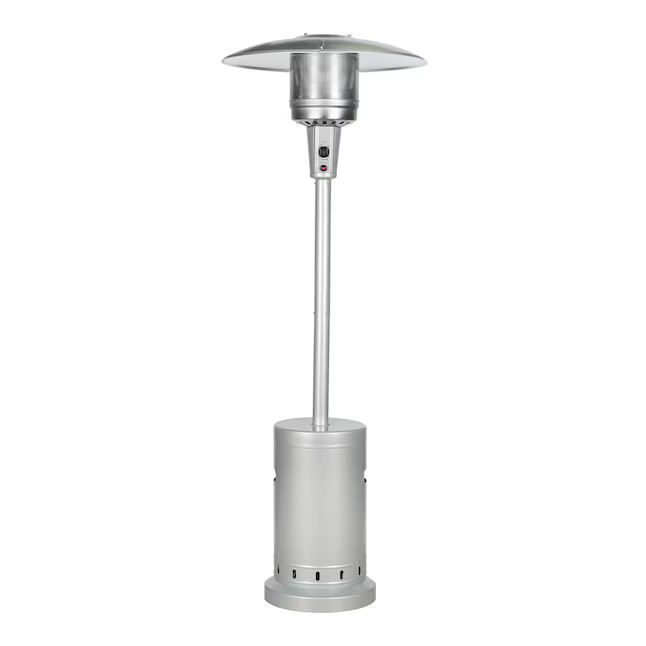
Silver Mushroom Heater
- Stainless Steel
$130 per event day + propane per filled tank
Rent This Model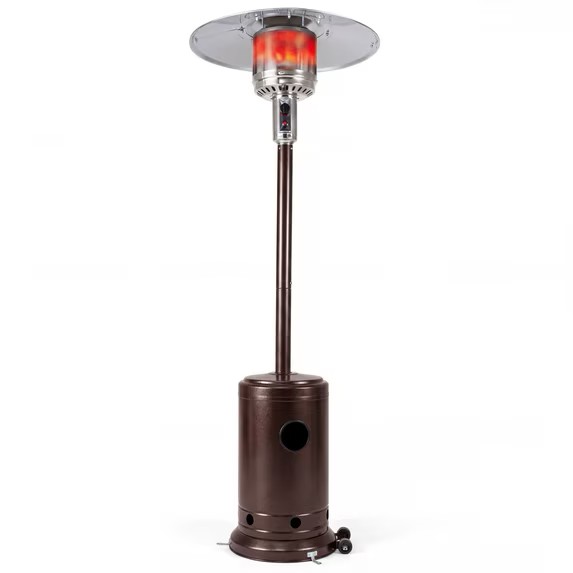
Bronze Mushroom Heater
- Bronze
$130 per event day + propane per filled tank
Rent This Model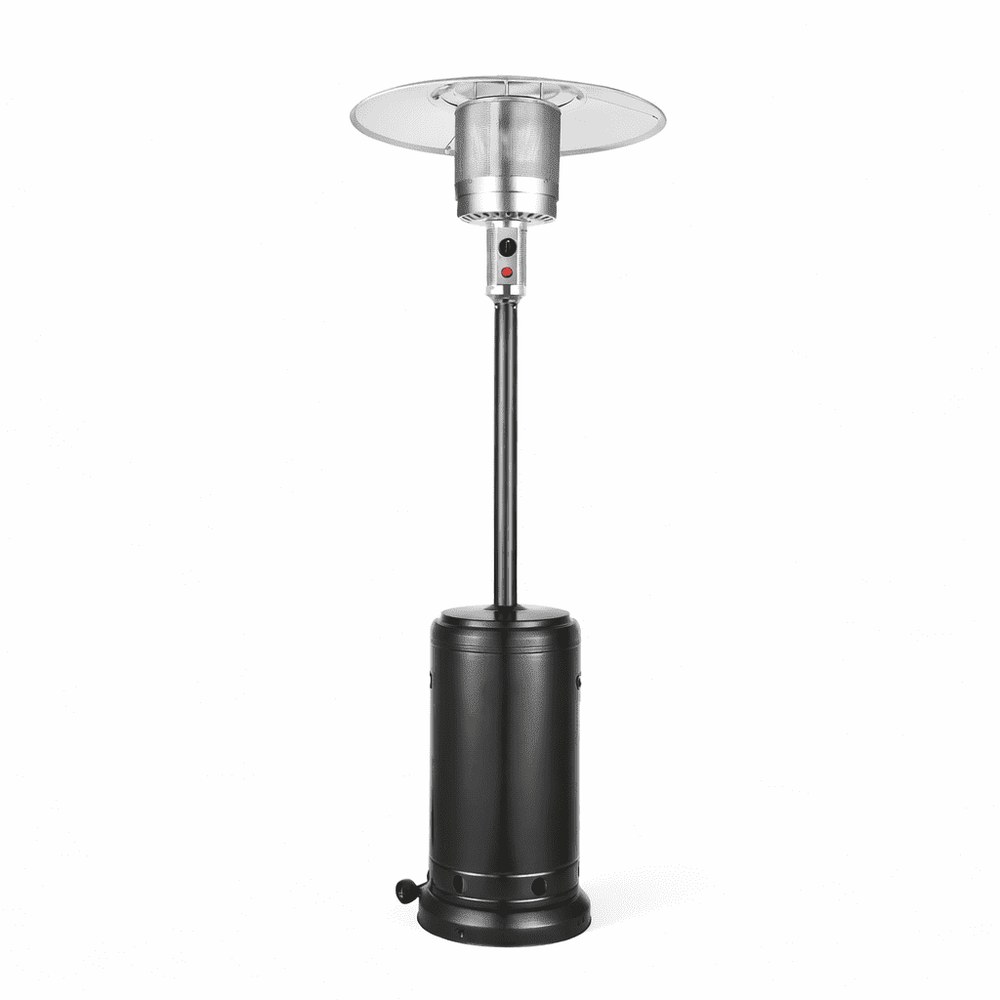
Black Mushroom Heater
- Matte Black
$130 per event day + propane per filled tank
Rent This ModelTabletop Heater Rentals
The small units that ride the bar rail, the buffet and the gift or card table — warmth on the surfaces a 90-inch column can’t reach.
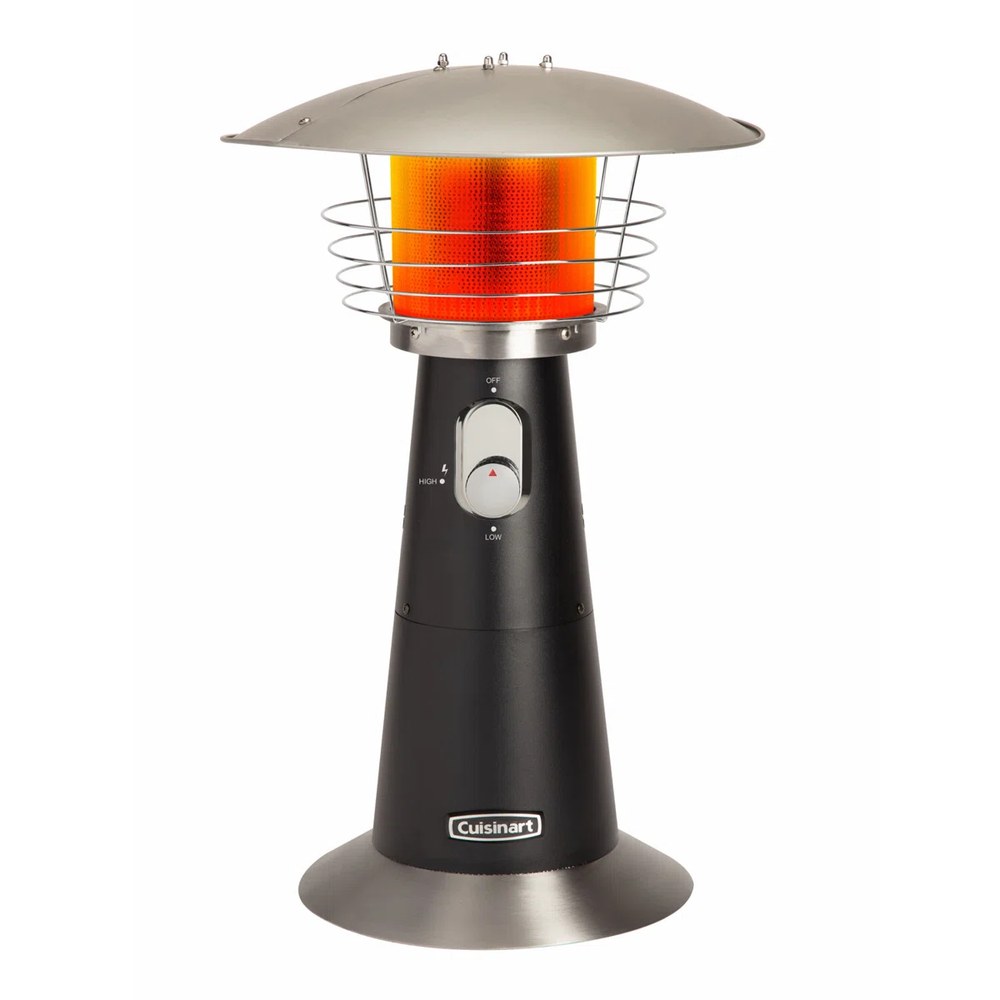
Black Tabletop Heater
- Black & Brushed Steel
$130 per event day + propane per filled tank
Rent This ModelTriangle (Pyramid) Heater Rentals
Glass-tube flame columns that heat the aisle and the entrance while the visible flame does half the décor’s job.
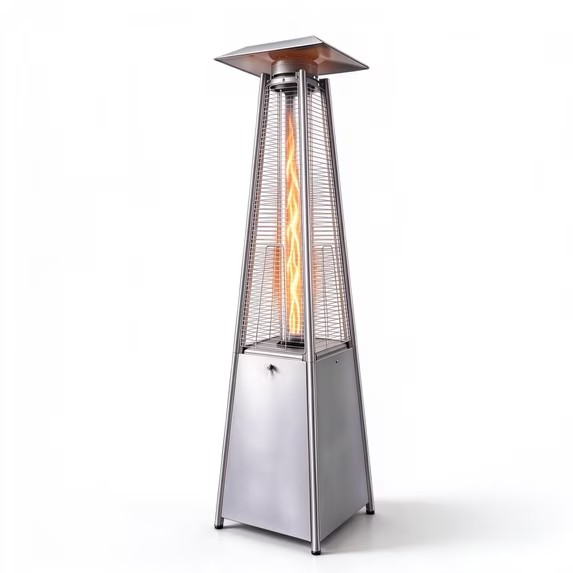
Stainless Pyramid Heater
- Stainless Steel
$130 per event day + propane per filled tank
Rent This ModelThree jobs at every market row
Vendors stand still for eight hours with their hands busy — that is the coldest job at any outdoor event, and a cold vendor sells less and asks for a refund. Food and beer lines are the second: a queue of people waiting fifteen minutes in wind will abandon it, and an abandoned queue is a lost ticket. The third is seating, where a market's actual dwell time is won or lost.
The fleet maps cleanly onto those roles, because it is four rentals on one flat rate: the 48,000–50,000 BTU mushroom, the 11,000 BTU tabletop, the 55,000 BTU glass-tube pyramid and the propane fire pit table. Every one of them runs $130 per heater, per event day, with propane billed per filled tank used. Mushrooms anchor vendor pairs and seating clusters, pyramids work the beer garden and the photo arch as both warmth and destination, and a fire pit table dropped into the middle of the rest seating is the one spot shoppers actually stop and stay. The information booth and the ticket gate each get a mushroom of their own rather than borrowing warmth downwind, because a staffed post stands still for eight hours — and the raffle or silent-auction counter gets a tabletop on the surface itself.
Sizing vendor rows and food lines
Aisles get a rhythm rather than a count. One mushroom every 10–12 feet down a walkway gives continuous coverage for shoppers and reaches the front of two facing booths; on a wind-exposed street we set them every 8 feet and alternate sides so gusts cannot strip the whole run at once. Booth coverage is one unit per two facing vendors, placed at the aisle line rather than behind the merchandise.
- 1,200 ft of vendor aisles: eight to ten units per aisle run, alternating sides on wind days
- Food queue of 25–30 people: one mushroom at the head of line, one at the tail, pyramids only at the photo arch
- Beer garden, 80 standing: six mushrooms on a 100–150 sq ft rule, plus two pyramid pairs or a fire pit table as seating centers
- Main-stage crowd: heaters at the back and sides only — radiant warmth is invisible to a packed floor
- Ticket gate and information booth: two mushrooms each at the staffed side, because those posts run all day
Placement: egress, gusts between buildings, sandbagged bases
Street events have constraints a wedding does not. Nothing sits in a fire lane or an ADA path, no base blocks an emergency exit door, and every unit keeps its 36 inches of clearance from canopy fabric, signage banners and a food truck's umbrella. We walk the row with your site map, mark positions in paint or cones the morning of, and hand the placement map to your safety officer — the same document they need for their own plan.
Downtown blocks funnel wind: a 10 mph gust between two brick buildings behaves like 20 in the aisle. We pair units on the windward end of every run, back them against whatever windbreak exists, and weight bases with sandbags on hard surfaces where a gust or a crowd surge could shift one. Open flame is not allowed inside most market buildings and pavilions, so those interiors stay on our map as flame-free zones — we heat the aisles, the arch and the garden, and we will not pretend otherwise about the shed with the roof on it.
Multi-day logistics: deliveries, swaps, pickups
Festival rentals are an operations problem before they are a comfort problem. A 30-unit fleet on a Friday-to-Sunday fair means delivery inside a pre-gate window — typically 5am to 7am, before a vendor truck enters the block — and re-placement overnight if the fair layout changes between days. We schedule tank swaps on the clock rather than on complaint: at 50,000 BTU a 20-pound cylinder runs about 10.5–9 hours, so an eight-hour day plus preheat is one tank per unit per day.
Our weekday service window runs 7am–7pm and Sunday swaps run 9am–5pm, which covers a Saturday afternoon top-off without touching a Sunday teardown. Fuel, leak-checks and relights are ours, not the vendor association's. Pickup is scheduled after the last fence comes down, and a fair that wants the fleet back on the lawn next weekend gets a staged overnight plan rather than a second delivery.
Rain, wind calls and what heaters cannot do
Heaters keep a covered market comfortable in weather; they do not make an open square dry, and we do not oversell them. Radiant units are outdoor appliances and run fine in light rain with clearance respected, but standing water at a base and a crowd of children in a soaked aisle are two reasons we ask a site to make a call. Wind is the real variable: above roughly 20 mph, we will recommend pulling or re-siting open flame and leaning on whatever covered positions still hold a legal clearance — and at that point we would rather move units than argue with a gust.
Weather decisions on an event day are a live conversation with the crew lead, not a clause in a contract. We give your operations team a name and a plan: what we will do at 15 mph, what we will do at 25, and how quickly units move. Nobody in our line of work pretends the forecast is a promise.
Booking a festival season
Municipal and association fairs run from late November through February, and the calendar is crowded: the same 25–40 units that fit your Saturday market are on a wedding lawn the same night. Reserve 2–4 weeks ahead for peak weekends, and treat any date with a named downtown event on it as a four-week booking.
Fairs at 12 or more units get a free site walkthrough and a placement map with the quote — for most of our market clients that map is also what they submit to the city and to their safety officer. Final aisle counts and vendor layouts confirm 72 hours ahead; late additions get routed from whatever the fleet has loose that week.
Best for
- Winter markets and holiday vendor rows
- Food festivals with long ticketed queues
- Street fairs needing a placement map for city review
Watch out
- No open flame inside market houses, pavilions or buildings
- Fire lanes and ADA paths stay clear at every position
- Downtown gust corridors need paired, windward placement
What we place by the dozen
Festival-scale gear, with the coverage numbers beside each.
Heat the aisles before the season fills up
Tell us your date, layout and guest count — the placement plan and quote come back the same business day.
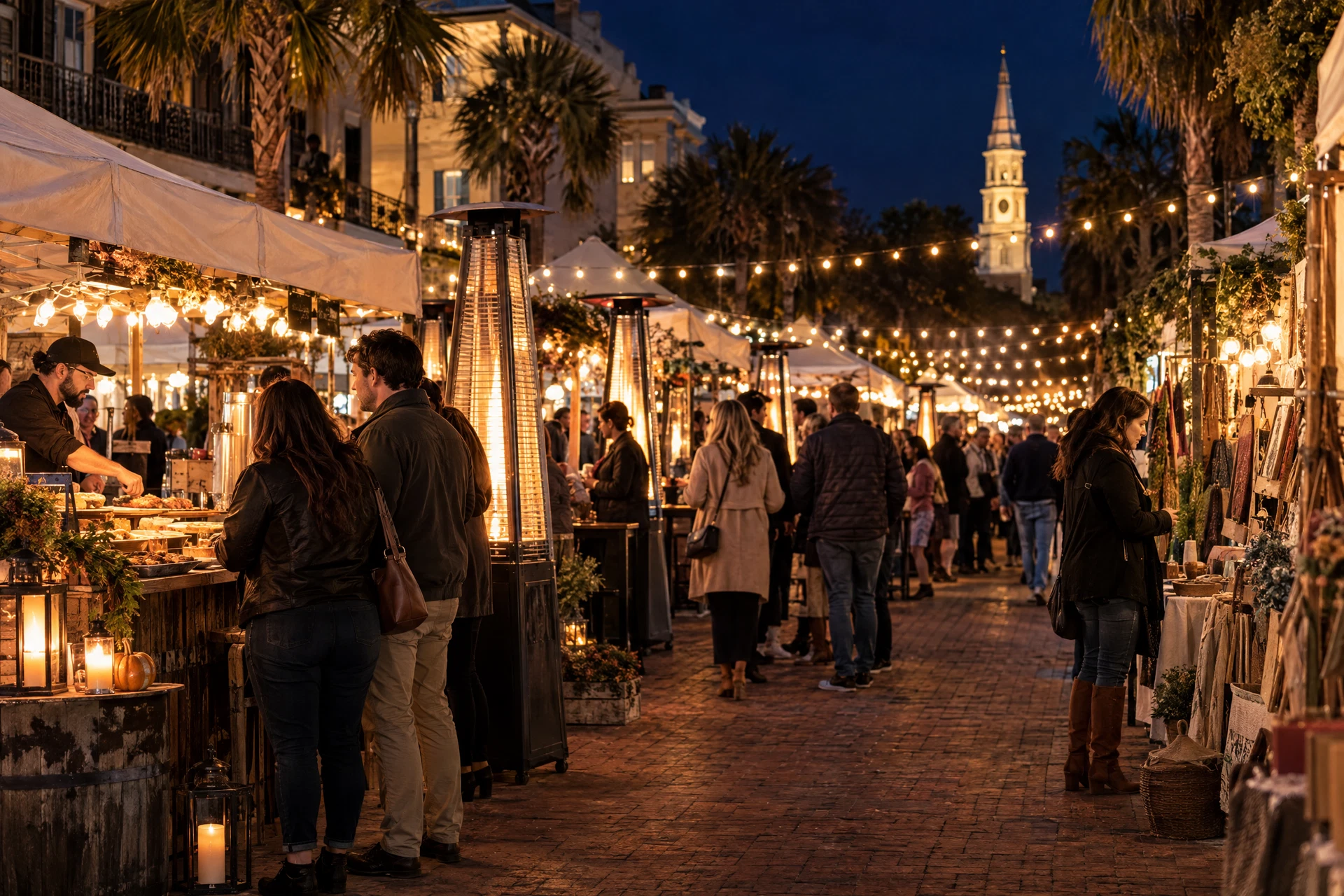
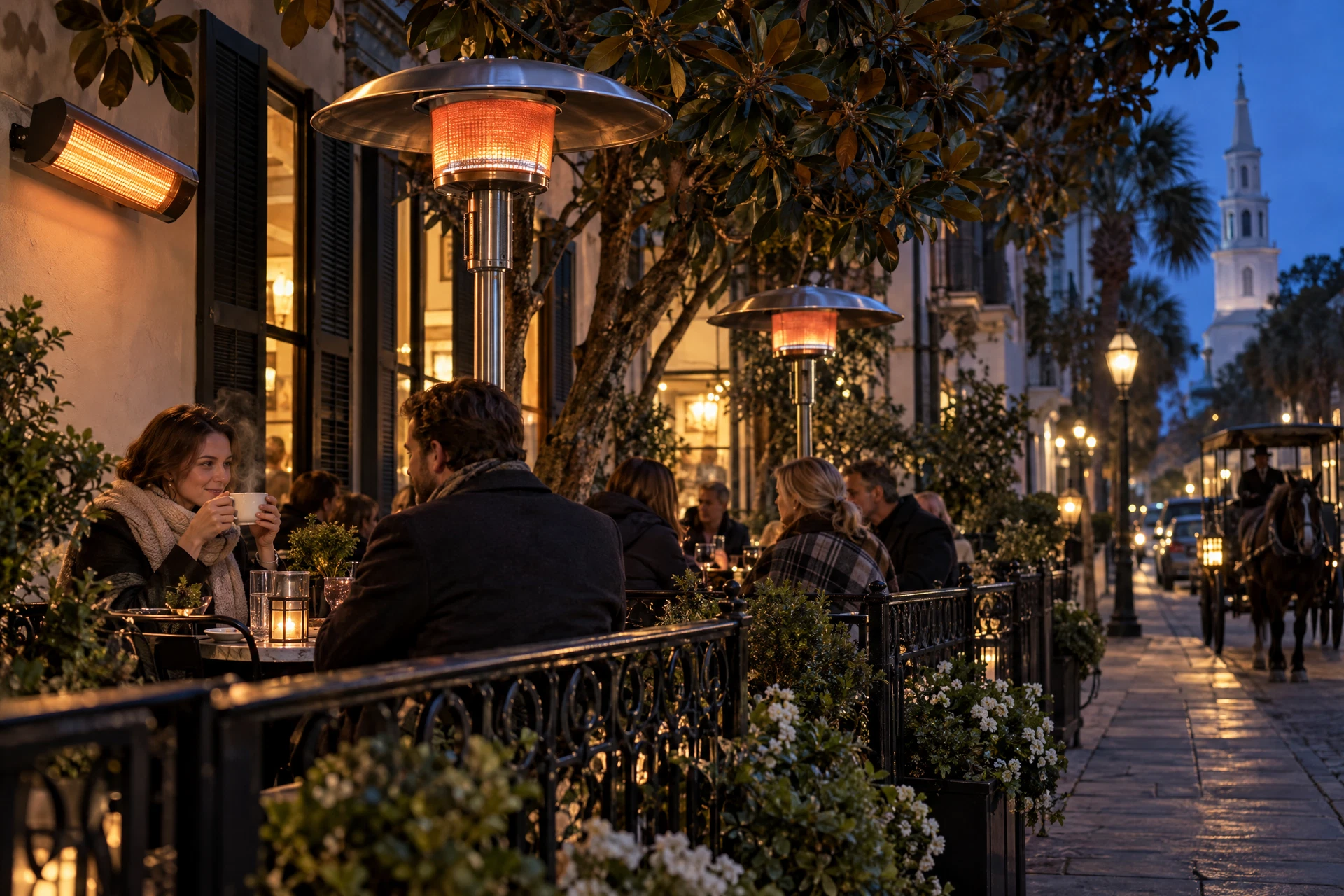
A market day, heated aisle by aisle
Frequently asked questions
How many heaters does a street fair need?
Aisle length and queues decide it, not attendance. A 200-vendor fair with roughly 1,200 feet of walkway, two food lines and a beer garden usually lands between 25 and 40 mushrooms. We build the count off your site map at the walkthrough, and the same map goes to your safety officer.
Can vendors rent one heater for their own booth?
We generally book by the row rather than the booth — it is cheaper for vendors and far easier to deliver, light and swap in one window. Association and market organizers run a single quote; individual vendors can join the schedule through them, and we set units at one per two facing booths.
Are propane heaters allowed inside a market pavilion?
No, and we are the ones who tell you that before the city does. Our whole fleet is open-flame propane, so an enclosed pavilion or market house simply gets nothing from us — no unit, no workaround, no creative reading of the rule. Open aisles, the beer garden, the arch and the lawn seating are where the mushrooms, pyramids and fire pits go, which is also what most venue rules already say.
When can you deliver if gates open at 10am?
Our weekday window starts at 7am, and for a market we usually negotiate a pre-gate placement at 5–7am with the site contact so nothing is rolling through a vendor load-in. Tank swaps are scheduled on the clock at $130 flat per heater, per event day with propane billed per filled tank used, and a Sunday fair can be topped off inside the 9am–5pm service window.
What happens if it gets windy or rains during the fair?
You talk to the crew lead the same day. Light rain does not take a radiant heater out of service, but standing water at a base does, and sustained wind above roughly 20 mph usually means we re-site units behind a windbreak or pull open flame from an exposed run entirely. There is no clause that decides it in advance.
Market managers and fair organizers
“Twenty-eight units delivered before dawn, a map for our safety officer, and swaps that vendors never noticed. The aisles stayed busy until close.”
“Our food queues used to break off at dusk. Now they run at full length through eight, which is the whole margin of the weekend.”
“The placement map satisfied the city review without a second round. That alone was worth booking early.”