
Heater Guide · Ambience + Warmth
Glass-Tube Pyramid Heaters: The Warmth Guests Photograph
Pyramid heaters — sometimes called triangle heaters for their tapered silhouette — wrap a real flame inside a draft-free glass tube, producing a slow-turning spiral of fire that is equal parts heat source and lighting design. At 55,000 BTU they warm a roughly 10-foot zone for about 12 hours on one tank while giving Charleston weddings, galas and holiday parties the glow that shows up on every photo card.
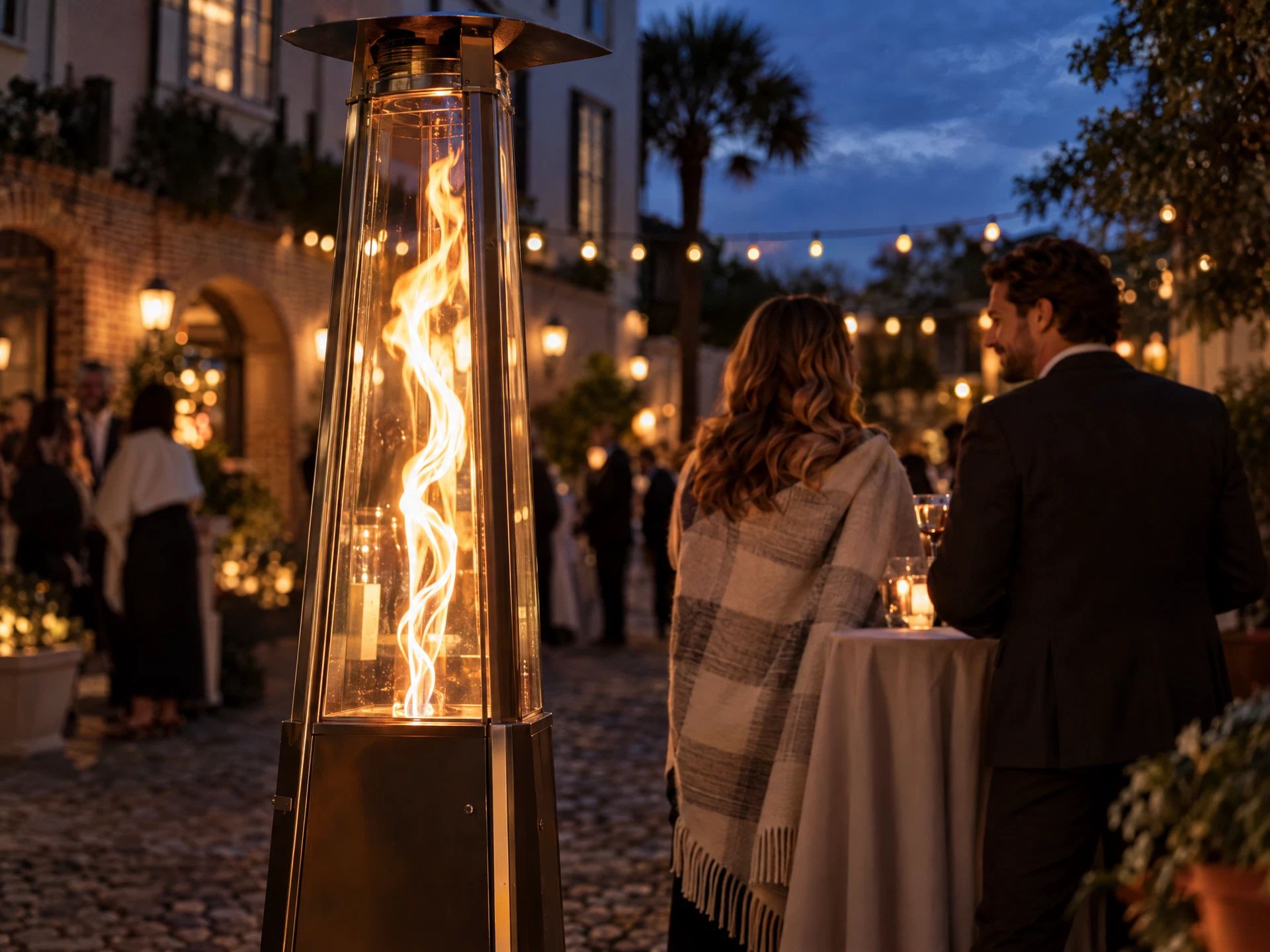
What the glass tube changes
In an open-flame heater the burner sits exposed: wind flatters the flame and some warmth rises unreflected. The pyramid's tempered borosilicate glass tube encloses the burner and creates a chimney effect — air is drawn in at the base, the flame burns steadier and hotter inside the tube, and a polished base reflector angles that energy outward at eye and body level.
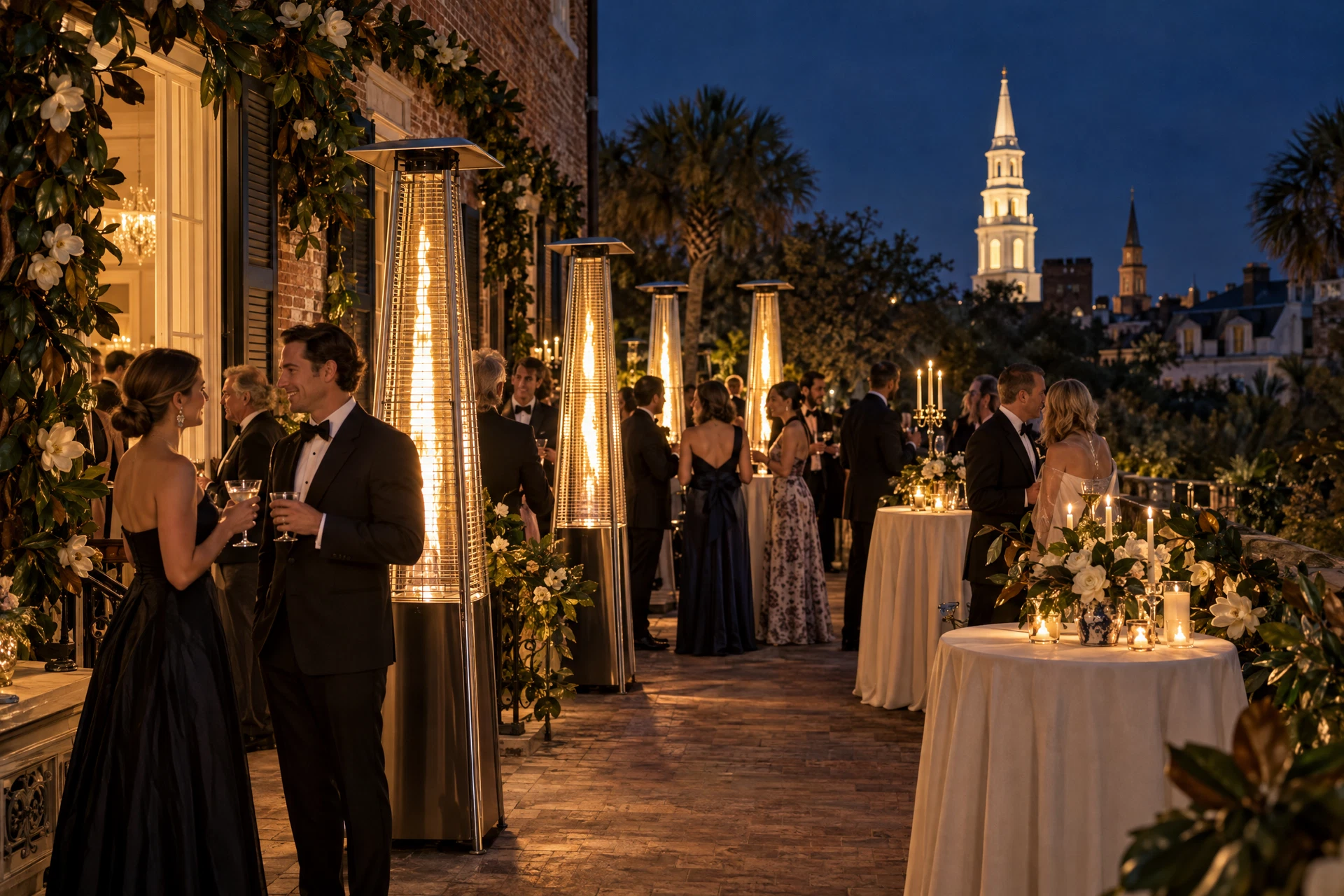
The visible result is the signature feature: a 360-degree spiral flame, roughly 24 inches tall, that reads as candlelight amplified. Event designers choose pyramids where the heater doubles as décor — reception rows, aisle edges, terrace parapets — because the flame is the lighting. The trade-off: the number on the box is higher than a mushroom's, but there is no dome to bank heat back into the group — all four glass sides radiate outward into a wider, softer circle.
Heat performance, honestly
Expect a 10-to-12-foot comfort diameter — one unit per six to eight seated guests or a defined standing vignette. Because the tube blocks wind from the flame itself, pyramids hold their output better in breezes than open burners hold theirs: the flame does not dance, so the warmth stays even even though wind still strips your skin's warm layer. Along exposed harbor edges and beachfront lawns, keep pyramids for ambience and let the 50k mushrooms do the heavy heating.
Glass also radiates: roughly a third of output leaves through the tube as infrared, which is why guests near a pyramid feel warmth from the side, not just under the head like a mushroom. That sideways glow is exactly what makes aisle rows feel warm in photographs and in person.
Fuel, runtime and fill logistics
55,000 BTU/hr against a 20-lb tank (roughly 430,000 usable BTU) runs about 8 hours at high — the steadiest flame in the fleet. The glass flame tube keeps a steady burn at lower gas pressure than a dome burner, so mid-setting is genuinely livable: we dim fleets to 60% between cocktail hour and first dance, then full after sunset when the air drops ten degrees. Propane is billed per filled tank used, and the tank hides completely inside the base column.
- High (55k): ~8 hours per 20-lb tank
- Medium (~30k): ~14 hours
- Tank hides inside the base column — no exposed cylinders in photos
- Glass tube is replaceable; units ship with a hinged access gate
Build, finishes and safety notes
Fleet standard: 304 stainless column and base, tempered borosilicate flame tube rated for thermal shock, tip-over shutoff, flame-failure safety device, child-resistant gas knob, and electronic ignition at a height a server can reach. Finishes run stainless and black as standard, with bronze available on request for traditional venues — the dark columns disappear into night photos while the flame carries the frame.
The tube is a guard, not a toy: 36-inch clearance from drapery, florals and tent fabric stays non-negotiable, and crews wipe glass with high-temp cleaner after each event so the flame reads clean on camera. Every unit is CSA listed for outdoor use, which is the paperwork Charleston venues actually request.
Aisle and entrance placement patterns
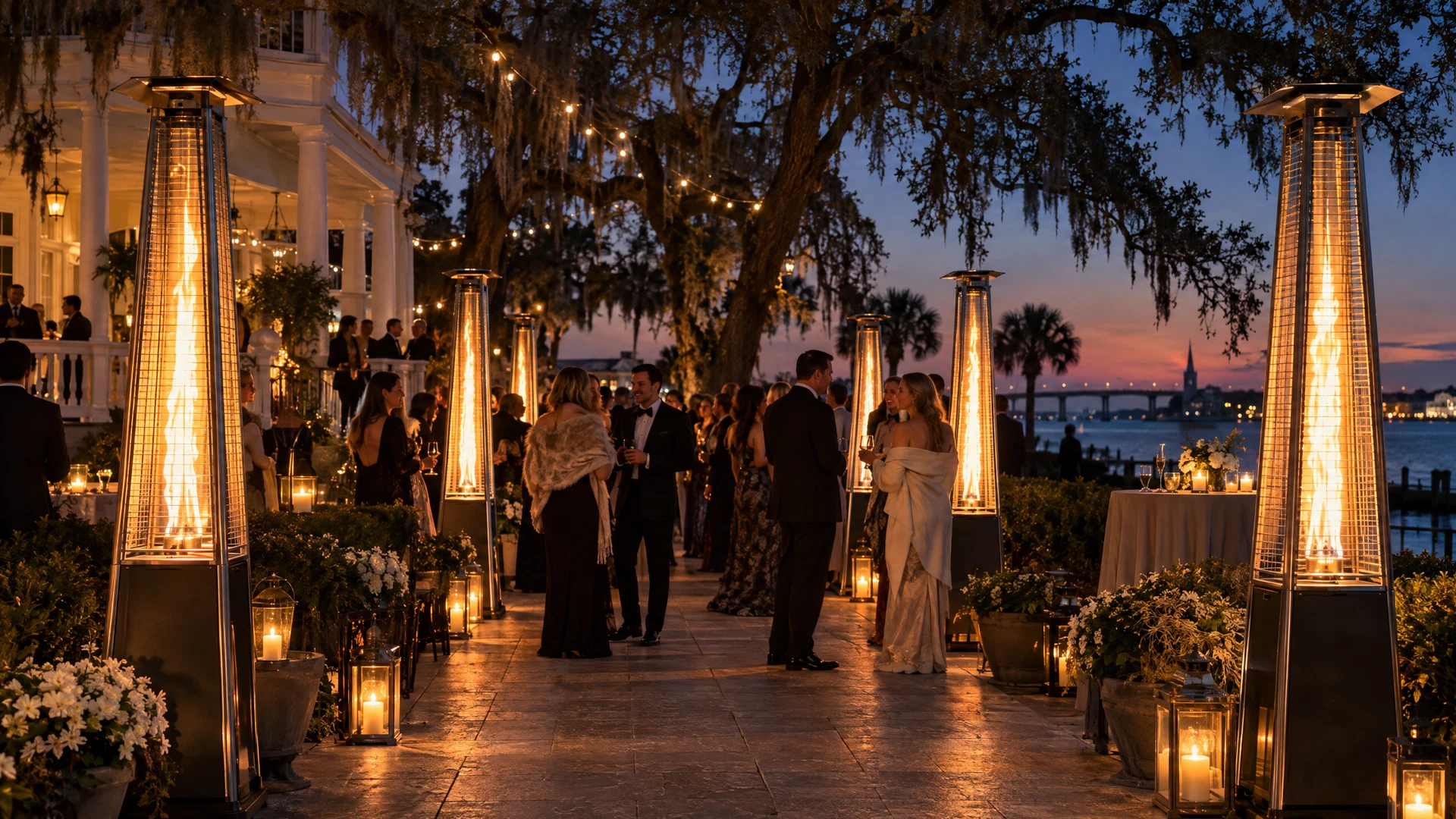
Pyramids earn their keep in lines. For ceremony aisles we stage units 8–10 feet apart down both sides — close enough that the warmth overlaps across the aisle, spaced enough that each flame frames its own shot and guests walk a continuous corridor of glow rather than alternating warm and cold steps.
At entrances, a flanking pair marks the doorway from the street and gives photographers a lit threshold for arrivals and the send-off. Around reception rows, run pyramids at the ends and corners of each seating block and let mushrooms own the table centers; the pair covers physics and photography at the same time. Send your floor plan and our crew marks the row spacing for you.
Full specification sheet
| Heat output | 55,000 BTU/hr high, ~25,000 medium |
|---|---|
| Flame feature | 24 in glass-tube spiral flame, 360° view |
| Fuel | 20-lb LPG tank hidden in column base |
| Runtime | ~8 hrs high · ~16 hrs medium per tank |
| Comfort zone | ~10 ft diameter; glass radiates from the side |
| Ignition | Electronic push-button |
| Safety systems | Tip-over shutoff, flame-failure device, wind-free burner |
| Dimensions | 89.4 in tall · 17.5 in square base · ~65 lb |
| Materials | 304 stainless column, tempered borosilicate flame tube |
| Finishes | Stainless and black standard; bronze on request |
| Certification | CSA listed for outdoor use |
| Clearance | 36 in to combustibles |
| Rental rate | $130 per heater, per event day |
| Propane | Billed per filled tank used |
Best for
- Wedding ceremony and reception rows
- Gala and fundraiser entrances
- Holiday patios doubling as décor
- Cocktail zones guests photograph
Watch out
- Fewer BTUs than a mushroom dome — pair them for dining tables
- Glass gets wiped after every event; do not clean hot tubes
- Open-leg tents with drapery need the full 36 in clearance
- Bronze is a request-ahead finish, not always same-week stock
Pair the glow with the plan
Book the row your photos will feature
Tell us your date, layout and guest count — the placement plan and quote come back the same business day.
Pyramids doing their glow
Frequently asked questions
Are pyramid heaters as warm as mushroom heaters?
Close but not quite — 55,000 BTU against the mushroom's 50,000, and the dome banks more heat into the group. Where wind hits the flame directly, though, pyramids hold steady because their burner lives inside the glass tube. For dining tables we pair mushrooms; for aisles, entrances and cocktail vignettes the pyramid is the better instrument.
Is the glass tube fragile?
The tempered borosilicate tube handles thermal shock and normal event bumps, and it is replaceable and covered by our rental protection. Crews gate the tube during transport, set the unit upright on level ground, and keep 36 inches of clearance so nobody brushes drapery or a train into hot glass.
How many pyramids for a wedding?
The formulas we run most: four to six lining a ceremony aisle at 8–10 foot spacing, one per reception table cluster of six to eight where ambience outranks raw BTU, plus a pair framing the head table or entrance. Send your floor plan and we will mark the row positions on it before you book.
What do pyramid rentals cost?
A flat $130 per heater per event day; propane billed per filled tank used. Finishes cost the same — stainless and black are standard on the pyramid line and bronze is available on request — and delivery, lighting and pickup are quoted per event so your approval covers the whole job.
How long will one tank run a pyramid?
About 8 hours at the full 55,000 BTU setting and roughly 12 hours at medium — a normal evening runs on one 20-lb tank, and longer events get a scheduled swap of filled tanks. The cylinder hides inside the base column, so nothing shows in photographs.
What the flame buys
“The photos. Every single shot from the aisle had a pyramid glow in it. Guests kept asking what time the heaters turned into lighting — the answer was always.”
“We stagger six pyramids at our holiday cocktail terrace and the space rents itself. Delivery, lighting, pickup — done before our doors open.”